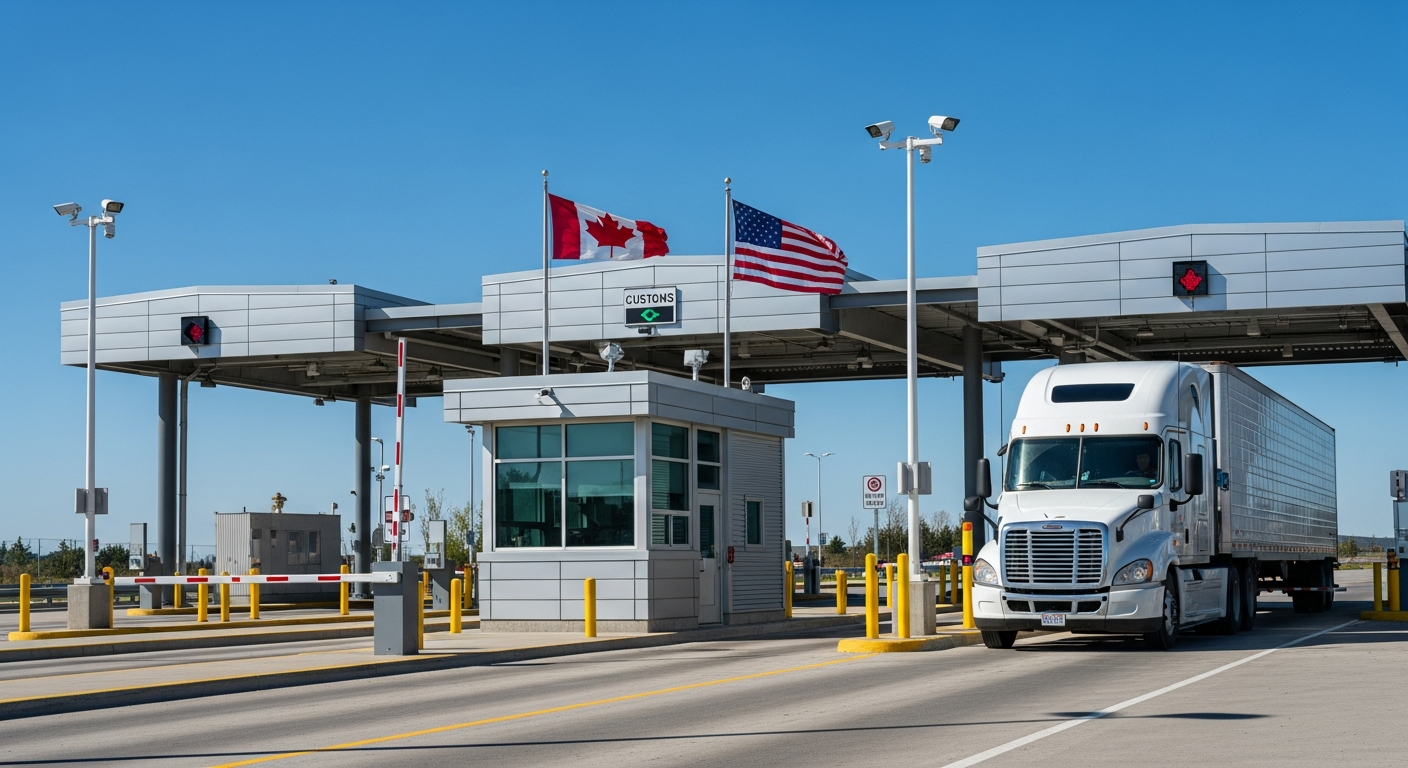

No official form — just the right information
CUSMA replaced NAFTA in 2020 and did away with the prescribed certificate form. The certification can now sit on any document, including your commercial invoice, as long as it carries the nine required data elements.
It also lets the importer, exporter, or producer certify — not just the exporter or producer as under NAFTA. More flexibility, but the same need for accuracy.
The nine required data elements
Whatever document you use, your CUSMA certification has to include all of these. Miss one and the claim can be rejected.
Who is certifying
State whether the certifier is the importer, exporter, or producer, and include their name, title, address, phone, and email. Under CUSMA any of the three can complete the certification.
Parties to the shipment
Provide the exporter, producer, and importer names and addresses. If the producer is confidential you can state 'Available upon request', and 'Various' is allowed for multiple producers.
Goods description & HS code
Describe the goods clearly enough to relate them to the shipment, and give the 6-digit HS tariff classification for each. This ties the certification to the exact products crossing the border.
Origin criterion
List the origin criterion (A, B, C, or D) that each good qualifies under. This is how you show the goods actually meet the CUSMA rules of origin, not just that they shipped from a member country.
Blanket period (optional)
If the certification covers multiple shipments of identical goods, include a blanket period of up to 12 months so you don't have to certify each shipment separately.
Signature & certification
Finish with the authorized signature, date, and the prescribed certification statement confirming the goods qualify and the information is true and accurate.
From qualifying goods to a duty-free claim
Three steps to claim preferential CUSMA treatment with confidence.
Confirm the goods qualify
Check the goods against the CUSMA rules of origin for their tariff classification — wholly obtained, made entirely from originating materials, or meeting the product-specific rule (tariff shift or regional value content).
Complete the certification
Put the nine required data elements on any document — your commercial invoice or a separate form. There is no official CUSMA form; the content is what matters, not the format.
Claim the preferential rate
The importer uses the certification to claim duty-free or reduced-duty CUSMA treatment at the border, and keeps it (and supporting records) for six years in case CBSA asks.

Shipping from the US doesn't mean it qualifies
A common and expensive mistake is assuming goods qualify for CUSMA just because they ship from a member country. They have to actually meet the rules of origin — wholly obtained, made from originating materials, or satisfying the product-specific tariff shift or regional value content rule.
We confirm whether your goods qualify, identify the correct origin criterion, and review your certification so your duty-free claim holds up if CBSA verifies it.
Frequently asked questions
The questions importers and exporters ask us most about CUSMA origin.