
Nearly 80 percent of Canadian businesses importing goods into Canada encounter challenges with regulations and paperwork. Expanding your international trade can open doors, but each step comes with its own compliance demands that can trip up even experienced importers. This guide highlights the most important actions— from registration and product classification to customs clearance—so you can move your commercial shipments smoothly across Canadian borders.
Table of Contents
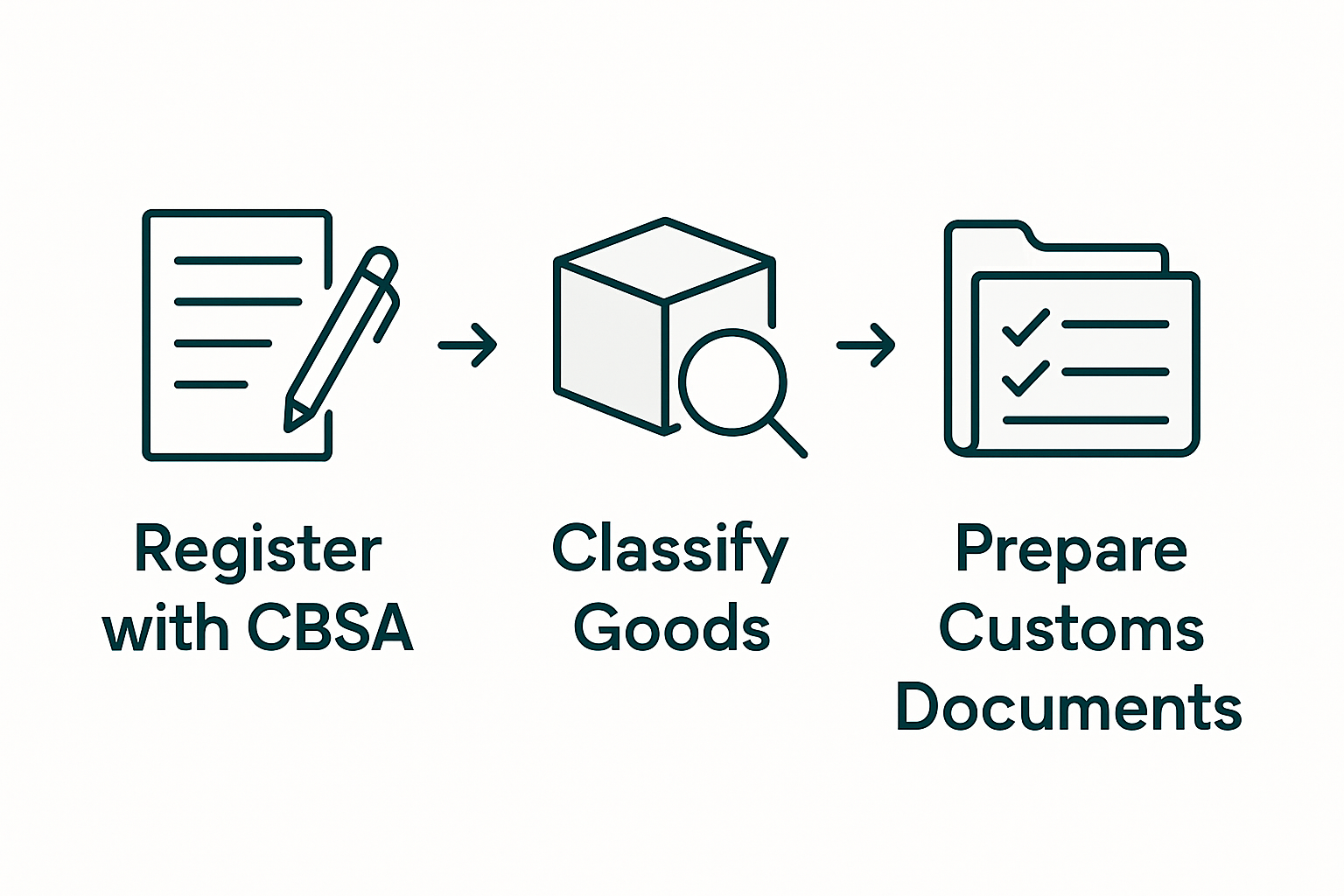
- Step 1: Determine Import Requirements And Register Your Business
- Step 2: Classify Goods And Calculate Duties
- Step 3: Prepare And Submit Accurate Customs Documentation
- Step 4: Arrange Shipment And Meet Border Compliance
- Step 5: Verify Customs Clearance And Finalize Delivery
Quick Summary
| Key Takeaway | Explanation |
|---|---|
| 1. Register with CBSA’s CARM System | Mandatory registration allows tracking of import activities and ensures customs compliance. Provide necessary business and product details. |
| 2. Classify Goods Accurately | Use Harmonized System codes to determine duties and ensure compliance. Misclassification may lead to penalties and shipping delays. |
| 3. Prepare Precise Customs Documentation | Accurate paperwork, including Canada Customs Invoice, is essential to prevent delays. Ensure consistency across all documents submitted. |
| 4. Ensure Border Compliance for Shipments | Verify shipment meets all Canadian regulations before shipping. Non-compliance can lead to rejections or legal issues. |
| 5. Respond Promptly During Customs Clearance | Be ready for inquiries from customs officials to avoid delays. Timely payment of duties ensures swift clearance and delivery. |
Step 1: Determine Import Requirements and Register Your Business
Importing goods into Canada requires careful planning and strategic preparation. Before shipping your first commercial product, you need to understand the regulatory landscape and officially establish your business framework for importing.
The first critical step involves registering for the Canada Border Services Agency (CBSA) Account Management and Registration (CARM) system. This mandatory registration process allows Canadian businesses to track their import activities and manage customs compliance efficiently. You will need to provide comprehensive business details including your legal business structure, tax identification number, and primary import categories.
To successfully register, gather essential documentation such as your business registration certificate, federal business number, and detailed information about the specific goods you plan to import. The CBSA requires precise classification of commercial goods using Harmonized System (HS) codes, which determine applicable tariffs and potential import restrictions. Accurate classification helps prevent unexpected delays or additional customs charges.
Be prepared to demonstrate your company’s financial stability and import history. Some importers might need to secure a customs bond or provide additional financial guarantees depending on their import volume and product categories. Consulting with a licensed customs broker can help navigate these complex requirements and ensure smooth registration.
Warning: Incomplete or inaccurate registration can result in shipment delays, potential fines, and complicated customs clearance processes. Precision is key when establishing your import credentials.
Step 2: Classify Goods and Calculate Duties
Importing commercial goods into Canada requires precise product classification and accurate duty calculation. This critical step determines the financial obligations and regulatory compliance for your international shipments.
The Harmonized System (HS) code is fundamental to this process. You will need to assign a specific 10 digit tariff classification number to each product, which determines applicable import duties and taxes. Using a comprehensive duty calculation tool can help streamline this complex process and provide accurate estimates of potential import costs.
Classification involves analyzing your product’s specific characteristics such as material composition, intended use, and manufacturing origin. The Canada Border Services Agency (CBSA) uses these details to assess appropriate tariff rates and potential trade agreements that might reduce your duty expenses. Accurate classification is not just about financial planning it also ensures compliance with Canadian import regulations.

Pay close attention to product details and be prepared to provide comprehensive documentation supporting your classification. Misclassification can result in significant financial penalties, unexpected customs delays, and potential shipment seizures. Working with a licensed customs broker can help you navigate these intricate classification requirements and minimize potential risks.
Warning: Small errors in product classification can lead to substantial financial consequences. Always verify your HS codes and consult professional customs experts when uncertain about your specific product categorization.
Step 3: Prepare and Submit Accurate Customs Documentation
Accurate documentation is the backbone of successful international trade. Your ability to prepare and submit precise customs paperwork will determine the smooth passage of your commercial goods through Canadian borders.
The Canada Customs Invoice (CCI) serves as the primary documentation for most commercial imports. Understanding how to complete shipping documents correctly is crucial for preventing costly delays and potential customs rejections. This invoice must include comprehensive details such as the exporter and importer information, precise product descriptions, total value of goods, country of origin, and applicable HS codes.
Your documentation package should include multiple critical components. Beyond the Canada Customs Invoice, you will need a commercial invoice, packing list, certificates of origin, and any specific permits required for your particular goods. Each document must be meticulously completed with consistent information across all paperwork to demonstrate transparency and compliance with Canadian import regulations.
Pay special attention to valuation documentation. The Canada Border Services Agency requires exact declarations of the transaction value, including all associated costs such as transportation, insurance, and handling fees. Undervaluing or misrepresenting goods can result in significant penalties and potential legal complications.
Warning: Incomplete or inaccurate documentation can trigger comprehensive customs inspections, potentially causing substantial shipping delays and unexpected additional expenses. Always double check every document before submission.
Step 4: Arrange Shipment and Meet Border Compliance
Successfully importing goods into Canada requires strategic shipment planning and meticulous attention to border compliance regulations. Your goal is to ensure your commercial shipment moves smoothly through Canadian customs with minimal complications.
Partnering with a knowledgeable customs broker can significantly streamline your shipping and compliance process. You will need to select an appropriate shipping method that balances cost effectiveness with delivery speed and reliability. Consider factors such as air freight for urgent shipments or ocean freight for larger volume commercial goods.
Each shipment must comply with specific Canadian border regulations. This involves verifying that your goods meet all import requirements including safety standards, product labeling guidelines, and potential import restrictions. Some products may require additional permits or certifications from Canadian regulatory agencies before they can clear customs.
Prepare comprehensive shipping documentation that includes detailed inventory lists, commercial invoices, certificates of origin, and any required permits. Ensure all paperwork accurately reflects the shipment contents, total value, and precise product classifications. Incomplete or inconsistent documentation can trigger time consuming customs inspections that delay your shipment.
Warning: Border compliance is not a one size fits all process. Different product categories have unique regulatory requirements. Always verify specific import regulations for your particular goods to avoid potential legal complications or shipment rejections.
Step 5: Verify Customs Clearance and Finalize Delivery
The final stage of importing goods into Canada involves carefully navigating customs clearance and ensuring your shipment reaches its final destination without complications. This critical phase transforms your meticulously planned import into a successful commercial transaction.
Understanding the essential customs clearance best practices can help you anticipate potential challenges and streamline the final delivery process. Once your shipment arrives at the Canadian border, customs officials will thoroughly review all documentation, verify product classifications, and assess applicable duties and taxes.
During the customs clearance process, be prepared to promptly respond to any inquiries or requests for additional information. Your customs broker can help expedite this process by ensuring all documentation is complete and accurate. Pay close attention to the assessment of duties and taxes, and be ready to make immediate payment to prevent shipment delays.
After successful customs clearance, coordinate with your logistics provider to arrange local delivery to your specified business location. This may involve drayage services that transport your goods from the commercial port to your warehouse or distribution center. Confirm all delivery details in advance and ensure someone is available to receive and inspect the shipment upon arrival.
Warning: Customs clearance timelines can vary significantly depending on the complexity of your shipment and the accuracy of your documentation. Unexpected delays can impact your business operations and inventory management, so build flexibility into your import schedule.
Simplify Your Import Process with Expert Canadian Customs Support
Importing goods to Canada involves complex steps like CBSA registration, HS code classification, and precise customs documentation. These common challenges can lead to costly delays or fines if not managed correctly. At J.W. Smith Customs Broker Ltd., we understand the pressure of meeting Canadian border compliance and the importance of accurate customs clearance for your commercial shipments.
Our personalized customs brokerage services cover everything from helping you register with the CARM system to calculating duties and arranging local drayage. With over 50 years of family-run experience, we provide a single point of contact who will guide you through each step smoothly. Take the guesswork out of importing by partnering with a licensed customs broker that puts your business needs first.
Ready to navigate Canadian import requirements with confidence and avoid costly compliance issues? Get started with a custom import estimate today at J.W. Smith Customs Broker Ltd.. Explore how our customs clearance services and expert guidance can help you save time and money on your next shipment.
Hand clearance to our import to Canada team.
Frequently Asked Questions
What are the steps to register my business for importing goods into Canada?
To register your business, complete the Canada Border Services Agency (CBSA) Account Management and Registration (CARM) process. Gather necessary documents like your business registration certificate and tax identification number, then provide information about your primary import categories.
How do I classify the goods I want to import into Canada?
To classify your goods, assign a specific 10-digit Harmonized System (HS) code that describes the product accurately. Analyze your product’s characteristics, such as material and intended use, to ensure compliance and prevent misclassification penalties.
What documents do I need to submit for customs clearance when importing goods?
You need to prepare several critical documents, including the Canada Customs Invoice, commercial invoice, and packing list. Ensure all paperwork is consistent and includes details like product descriptions and HS codes for smooth customs processing.
How can I ensure compliance with Canadian border regulations for my shipment?
To ensure compliance, verify that your goods meet all safety standards and labeling guidelines before shipment. Work with a knowledgeable customs broker to confirm that you understand specific regulations related to your product category.
What should I do if my shipment is delayed at customs?
If your shipment is delayed at customs, respond promptly to any requests for additional information from customs officials. Keep your customs broker informed to help expedite the clearance process and avoid further delays.
How can I coordinate local delivery after customs clearance?
After your shipment clears customs, arrange local delivery with a logistics provider. Confirm delivery details in advance and ensure someone is available to receive and inspect the shipment upon arrival.
Recommended
- Comprehensive 5-Step Guide for Importers | J.W. Smith Customs Brokers
- 5 Steps for Importing a Vehicle Into Canada | J.W. Smith Customs Brokers
- How to Import Food into Canada | J.W. Smith Customs Brokers
- How to Import a Car into Canada | J.W. Smith Customs Brokers
- How to Buy Wholesale Fabric: A Step-by-Step Guide - fabric fabric
- What Is Freight Forwarding? Guide for Modern Supply Chains 2025 - ORNER
Need Help with Customs?
J.W. Smith Customs Brokers has over 50 years of experience helping Canadian businesses navigate imports with confidence. Our team of licensed customs brokers is ready to assist with your import and export needs.
CBSA just published the Sep 8 U.S. surtax codes: what to put on the CAD
Sep 11, 2026
CPTPP for the UK is live: what Canadian importers change on the CAD
Sep 10, 2026
Monday's counter-tariffs on U.S. goods: what Canadian importers need to know
Sep 4, 2026
How to Import a Trailer to Canada From the U.S. (2026 Duty, RIV & Documents Guide)
Jun 26, 2026